Pest Control Service Fort Myers delivers verified perimeter barriers and targeted structural treatments across Lee County properties facing high humidity and relentless biological activity. Property owners requiring a pest control service near me receive diagnostic evaluations designed to neutralize subterranean termites, invasive ant colonies, and roof rats before structural integrity suffers.

Pest Control Service in Fort Myers is a systematic structural barrier application and exterior biological treatment protocol that eliminates active insect colonies and prevents subterranean organisms from compromising local properties.
Every service reflects the same meticulous attention to detail, whether it's a single job or a larger pest control service project across Fort Myers.
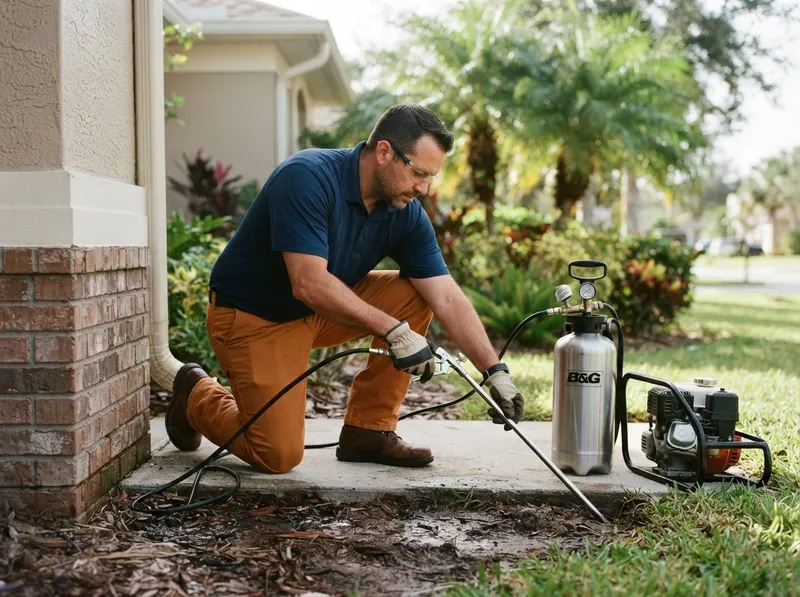
Subterranean termite control involves systematic soil trenching around building perimeters, injecting non-repellent liquid termiticides directly into soil adjacent to concrete stem walls, and installing specialized bait monitoring stations every 10 to 15 linear feet. This service targets native subterranean species (Reticulitermes flavipes) and aggressive Formosan subterranean termites (Coptotermes formosanus) that exploit plumbing penetrations, concrete cold joints, and slab cracks during spring swarming cycles. Technicians trench 6 inches wide by 6 inches deep around foundation footings, applying liquid non-repellents at a label rate of 4 gallons per 10 linear feet per foot of depth. Sub-slab rodding treats vulnerable entry points beneath garage slabs, front porticos, and rear lanais. Tamper-resistant bait stations placed in perimeter soil intercept foraging worker termites, distributing chitin synthesis inhibitors back to the primary underground colony to stop reproductive activity.
Get a quote →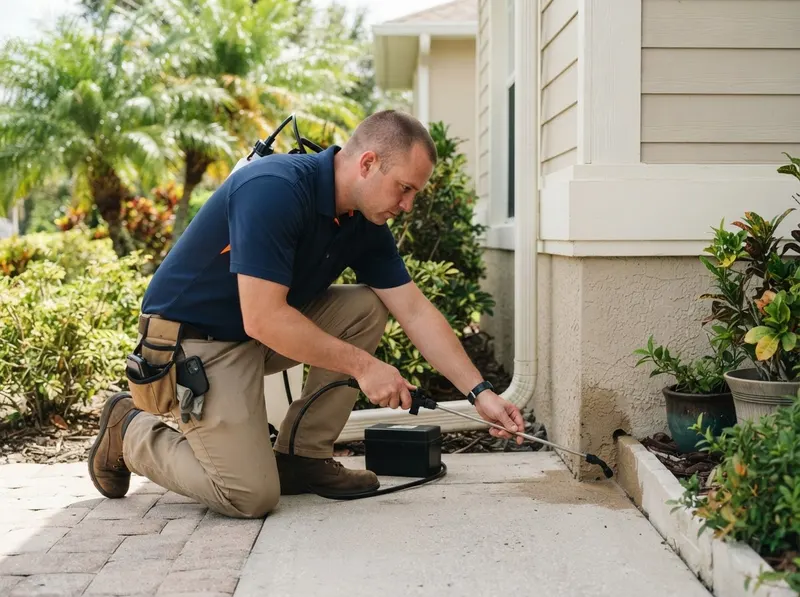
Quarterly perimeter pest defense creates an exterior chemical barrier extending three feet vertically up foundational masonry and six feet outward on surrounding turf, rocks, or mulch. Field technicians inspect and treat weep holes, expansion joints, door thresholds, utility conduits, and soffit edges using microencapsulated suspensions formulated to withstand extreme solar UV degradation and rainfall dilution. This protocol halts perimeter invaders, including American cockroaches (Periplaneta americana), Florida woods roaches, silverfish, and earwigs, before they breach exterior seals. The exterior-focused methodology minimizes the necessity of applying chemicals within interior living spaces while preventing crawling pests from transitioning across thresholds. Technicians clear spider webs and mud dauber nests from eaves up to 20 feet using telescoping extension poles dusted with natural pyrethrin dusts, treating garage access perimeters and exterior mechanical closets during each visit.
Get a quote →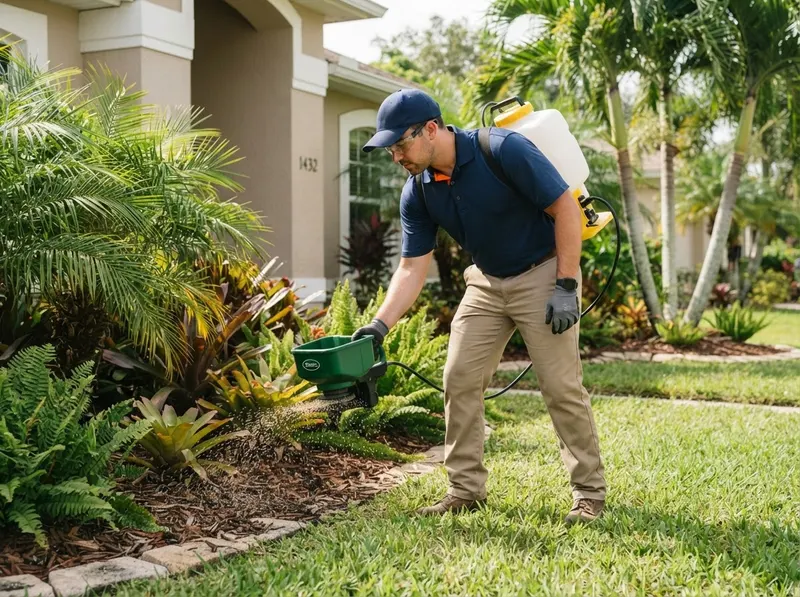
Lawn and landscape pest management treats St. Augustine (Floratam, Palmetto) and Zoysia turfgrass for destructive subterranean surface and subsurface feeders. Liquid and granular systemic treatments control southern chinch bugs (Blissus insularis), sod webworms, fall armyworms, and mole crickets that cause turf thinning and yellow circular dead zones. Applications penetrate deep into dense thatch and root systems, arresting root destruction and preserving root density against intense sub-tropical moisture conditions. Technicians evaluate turf condition, balance soil pH, and coordinate treatments with seasonal humidity shifts, preventing fungus developments such as large patch (Rhizoctonia solani) and take-all root rot from compromising turf integrity while eliminating insect colonies.
Get a quote →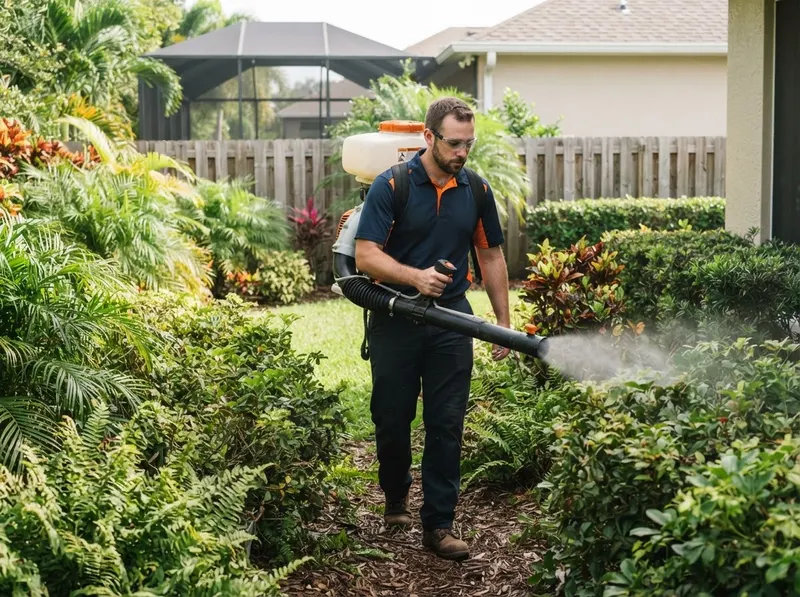
Mosquito reduction treatment utilizes specialized gas-powered backpack mist-blowers to distribute fine botanical adulticides and insect growth regulators (IGRs) across the undersides of dense foliage, ornamental shade canopies, ground covers, and exterior shaded structures. This monthly protocol stops biological reproductive breeding cycles within moisture-retaining bromeliads, landscape depressions, and low-lying vegetation during southwest Florida's heavy June-through-October convective rainy season. Applications treat resting zones favored by Aedes aegypti and Culex mosquitoes without contaminating flowering plants or local water retention ponds, providing measurable protection across outdoor lanais, pool cages, and backyards.
Get a quote →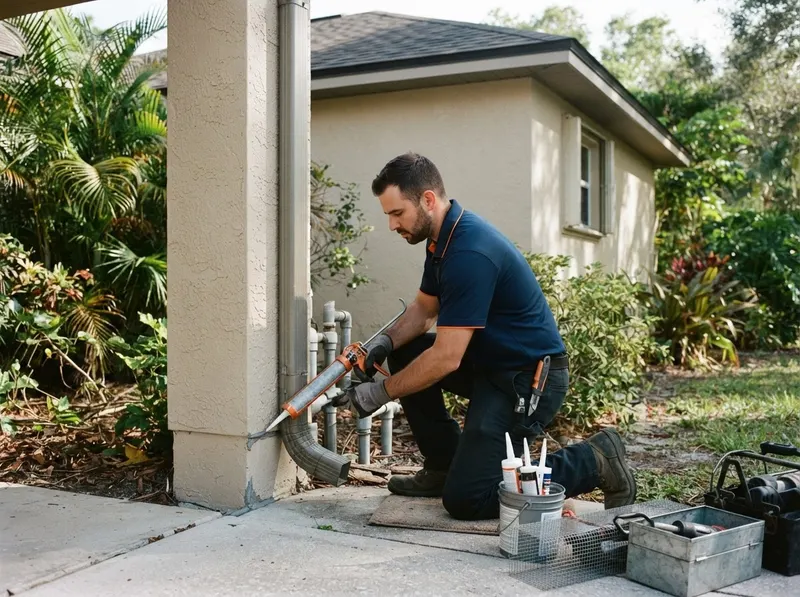
Rodent exclusion and abatement resolves roof rat (Rattus rattus) and house mouse incursions through attic spaces and soffits by pairing mechanical architectural sealing with interior containment. Technicians perform comprehensive 360-degree forensic property assessments, identifying breaches around Spanish barrel tiles, fascia boards, roof ridge vents, plumbing pipe jacks, and air conditioning line chases. Structural gaps larger than one-quarter inch are mechanically sealed using heavy-gauge galvanized steel mesh (hardware cloth), structural silicone elastomeric sealants, and custom metal flashing. Within attic spaces and drop ceilings, technicians deploy enclosed snap traps along verified travel paths, returning for multi-stage retrieval, sanitation, and monitoring until zero activity is recorded.
Get a quote →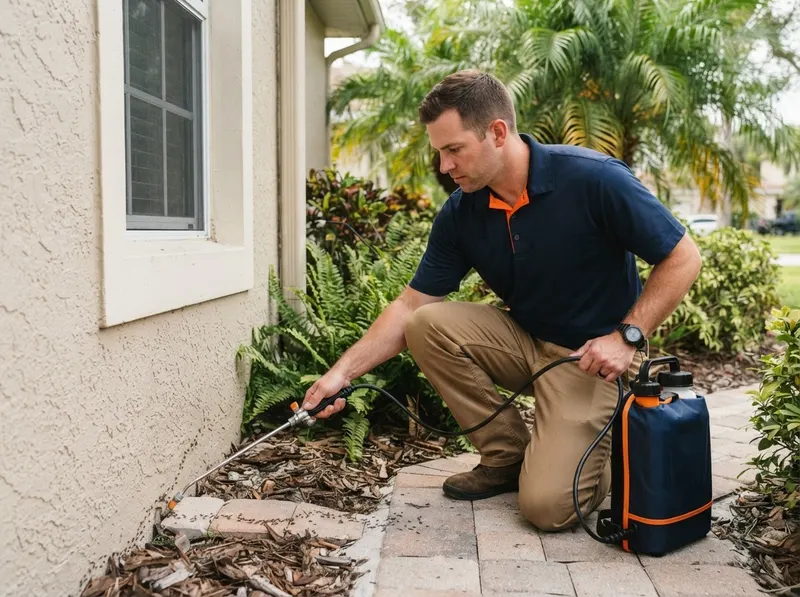
Invasive ant colony elimination targets difficult-to-control species common to southwest Florida, including ghost ants (Tapinoma melanocephalum), white-footed ants (Technomyrmex albipes), big-headed ants, and red imported fire ants (Solenopsis invicta). Technicians map outdoor nesting mounds, landscape timber boundaries, wall void trails, and plumbing penetrations. Instead of standard repellent sprays that cause colony budding and spread nests across multiple rooms, technicians apply specialized metabolic inhibitor baits and transfer-effect non-repellent liquids. Foraging worker ants ingest and carry active ingredients directly to hidden satellite queens, systematically collapsing the multi-queen colony network.
Get a quote →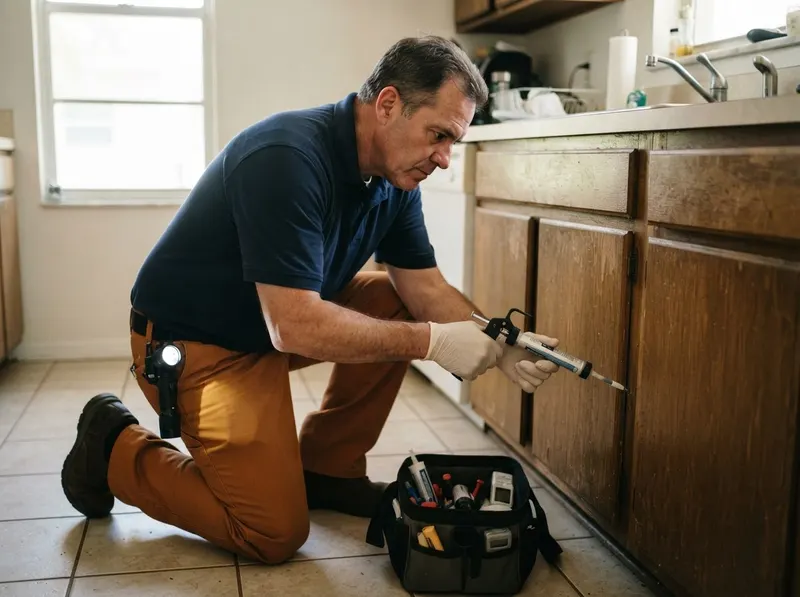
German cockroach (Blattella germanica) cleanout services eliminate deep indoor kitchen, bathroom, and structural harborages using advanced integrated pest management protocols. Technicians utilize targeted micro-gel bait placements, insect growth regulator concentrates, and botanical flushing agents behind heavy appliances, within cabinet hinge mortises, inside electrical gang boxes, and beneath sub-counter lips. This intensive multi-visit sequence halts reproductive hatching cycles, preventing juvenile nymphs from reaching reproductive maturity and clearing active multi-generational infestations without airborne chemical residues.
Get a quote →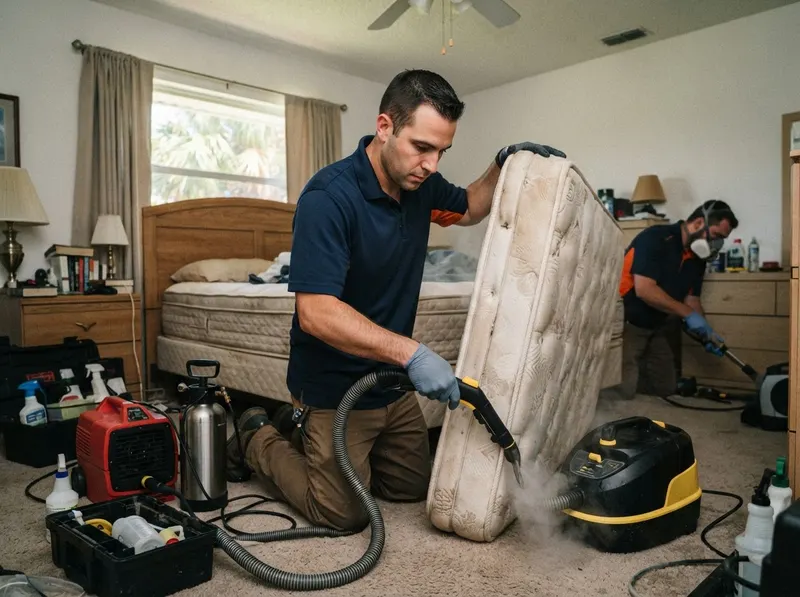
Bed bug remediation stops infestations hidden within mattress seams, box springs, headboards, baseboards, and wall joints through dual-action contact residual insecticides, desiccant dusts, and targeted localized heat systems. Technicians complete meticulous forensic room-by-room inspections using high-output inspection lamps, vacuuming harborages with HEPA filtration units to extract adult insects, cast skins, and viable egg clusters. Micro-crystalline desiccant dusts are injected into electrical outlets, baseboard voids, and carpet perimeters, establishing long-term residual barriers that eliminate emerging nymphs upon contact.
Get a quote →You get a firm, itemized quote for your pest control service before any work begins, no surprises, no pressure.
Careful prep, tidy work, and a full cleanup when we are done. We treat your home and belongings like our own.
The same trusted, background-checked team from the first call to the final check.
Property owners evaluating pest defense programs must match the operational treatment scope to structural vulnerability, insect biology, and architectural design. If the goal is stopping pervasive seasonal invasions of perimeter-crawling pests such as smoky brown cockroaches, silverfish, and fire ants before they enter living quarters, selecting a recurring Quarterly Perimeter Pest Defense program provides continuous protection. This approach establishes a 9-foot chemical barrier encompassing the bottom 3 feet of exterior stem wall masonry and a 6-foot outward ground band across mulch, pea gravel, and turf.
Conversely, if structural wood members, baseboards, or drywall reveal early signs of pinhole exit cavities, mud foraging tubes, or discarded reproductive wings between March and June, selecting a Subterranean Termite Liquid Trenching and Baiting System is necessary. The trade-off between these interventions centers on initial expenditure versus long-term structural asset protection: a quarterly perimeter program costs less initially ($250 to $480 per maintenance cycle) but does not remediate sub-slab or wall void termite colonies once wood fibers are breached. In contrast, subterranean termite defense entails a higher upfront cost ($950 to $2,400) while safeguarding structural load-bearing framing against catastrophic wood consumption.
Furthermore, if pest intrusions originate within elevated structures such as barrel tile roofs, dormer returns, or soffit gaps, mechanical Rodent Exclusion and Abatement must take precedence over chemical applications. If a building contains active interior infestations of German cockroaches or bed bugs, standard exterior perimeter defense will not solve the issue, requiring targeted micro-gel baiting or direct structural heat treatments. The ultimate selection hinges upon whether the active pressure stems from general soil moisture, wood-destroying biological activity, exterior landscape reservoirs, or architectural structural gaps.
Every project gets a firm, written price after a free on-site visit. Ranges below for orientation.
Tell us about your pest control service job and we'll send a clear, written quote, usually the same day. Or just call and talk to a real Fort Myers pro.
(239) 895-9744
Properties along the historic McGregor corridor, Dean Park Historic District, and riverside streets bordering the Caloosahatchee River face elevated subterranean termite swarms driven by legacy pine soils, mature oak trees, and high water tables. In these historic neighborhoods, crawl spaces, wood-framed construction, and direct masonry-to-ground contacts require specialized low-pressure non-repellent soil injections that will not damage historic landscaping or leach into coastal limestone formations. Meanwhile, master-planned developments in Gateway, Botanica Lakes, Paseo, and Pelican Preserve present unique structural pest risks due to Mediterranean barrel tile roofing designs and extensive conservation buffers. Roof rats routinely climb nearby royal palms and live oaks to access tile roof pans, chewing into untreated roof deck valleys and nesting within attic fiberglass insulation. Further inland, communities bordering the Six Mile Cypress Slough Preserve face persistent ghost ant trails, white-footed ants, and heavy mosquito populations fueled by standing backwater following humid summer convective rainstorms. In neighborhoods such as Whiskey Creek, Iona, and San Carlos Park, homes with aging concrete slab foundations frequently experience foundation hairline shifts, allowing native subterranean termites and fire ant colonies direct access into sub-floor plumbing rough-ins. Standard store-bought pyrethroid sprays quickly wash away in Lee County's intense heat, daily summer downpours, and sandy, porous soil. Effective defense requires professional-grade, microencapsulated barrier chemistries and deep non-repellent liquid soil injections that remain structurally stable despite seasonal humidity and localized water table fluctuations.
Free estimates for Fort Myers & the surrounding area.
 Blue Timber Pest Control