Bed bug thermal and chemical remediation balances rapid knockdown with long-term structural defense across Lee County's distinct microclimates. Southwest Florida's year-round indoor relative humidity levels, often…
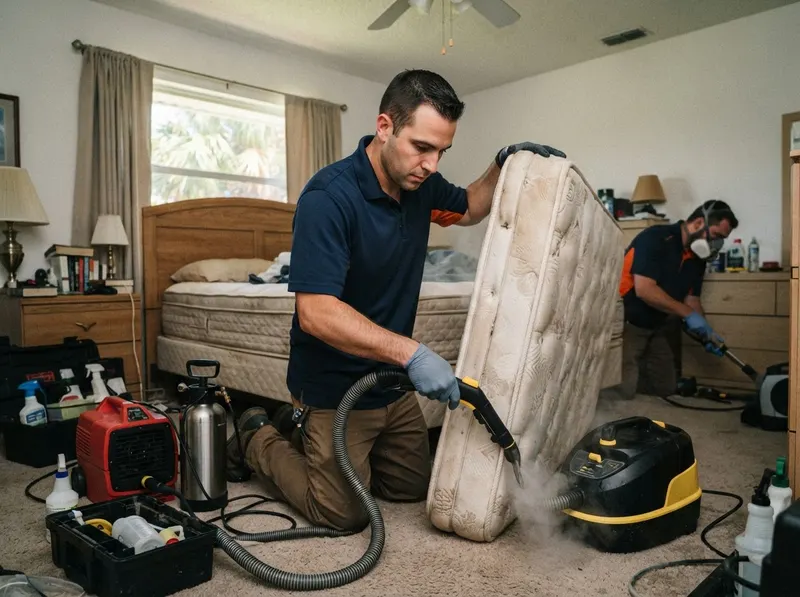
Bed bug thermal and chemical remediation balances rapid knockdown with long-term structural defense across Lee County's distinct microclimates. Southwest Florida's year-round indoor relative humidity levels, often hovering near 60% inside air-conditioned spaces, accelerate the bed bug (*Cimex lectularius*) metabolic cycle, allowing nymphs to mature into reproductive adults in roughly 21 days. In historic lath-and-plaster structures throughout the Dean Park Historic District and McGregor, pests retreat deep into interior wall cavities and void spaces behind uninsulated baseboards. Electric or forced-air indirect-fired heaters elevate structural temperatures past the lethal thermal death threshold of 122°F, penetrating deep into mattress cores, upholstered seam lines, and hardwood subfloors without requiring chemical soaking of sleeping surfaces.
Decision guidance dictates treatment selection based on property architecture and occupancy turnover. For standalone concrete-block homes in Gateway, Paseo, and Botanica Lakes, full thermal remediation offers immediate mortality across all life stages, including heat-resistant egg casings that resist routine retail foggers. However, heat leaves zero residual surface defense once structures cool. Pairing high thermal output with targeted applications of microencapsulated pyrethroids or amorphous silica dusts prevents re-infestation from multi-family shared walls in Pelican Preserve or seasonal tenant turnover in Whiskey Creek rentals. When handling multi-unit condos along the Caloosahatchee River or wood-framed structures in Iona, a dual approach ensures bugs fleeing outward from thermal radiation contact non-repellent residual chemical barriers placed along threshold margins.
Treatment execution follows three direct operational steps to prevent failure. First, preparation involves removing heat-sensitive items including wax candles, pressurized canisters, vinyl records, and meltable electronics. Second, high-powered fans distribute heated air between 125°F and 135°F while technicians monitor infrared thermal sensors at structural cold spots for a continuous 90 to 180 minutes. Third, precision residual applications seal cracks, crevices, wall plates, and structural plumbing chases to protect against insects carried in on guest luggage or laundry. Service can be coordinated directly by calling (239) 895-9744 to verify property square footage and receive staging protocols.
Every job gets a firm, written price after a free on-site visit.
Tell us about your bed bug thermal and chemical remediation job in Fort Myers and we'll send a clear, written quote, usually the same day.
 Blue Timber Pest Control