Fort Myers properties experience severe mosquito pressures fueled by coastal river deltas, tidal estuaries, and the Six Mile Cypress Slough drainage basin. Standing rainwater in dense landscaping creates rapid breeding…
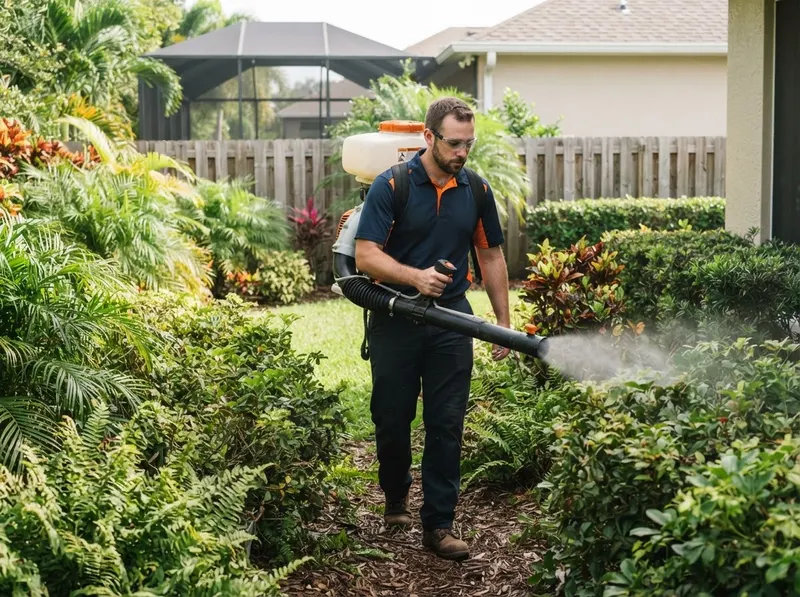
Fort Myers properties experience severe mosquito pressures fueled by coastal river deltas, tidal estuaries, and the Six Mile Cypress Slough drainage basin. Standing rainwater in dense landscaping creates rapid breeding cycles for Aedes and Culex species, which complete metamorphosis from egg to adult in 7 to 10 days during July and August heat. Professional treatment resolves this by bonding microencapsulated adulticides to the underside of broadleaf plants, such as sea grapes, crotons, and palms, where mosquitoes rest during peak sunlight hours. This distinct approach protects exterior gathering areas unlike store-bought contact sprays, which rinse away after a single subtropical downpour. Service agreements remain flexible with single-event applications or month-to-month visits during the peak rainy season from May through October, eliminating binding multi-year contracts.
Property layout determines application strategy across Fort Myers neighborhoods. In mature, riverfront communities like McGregor, Dean Park Historic District, and Iona, sprawling tree canopies and proximity to the Caloosahatchee River require comprehensive boundary misting up to 10 feet into the canopy to intercept adult swarms drifting off brackish waters. Inland suburban parcels in Botanica Lakes, Gateway, Paseo, and Pelican Preserve require perimeter-dense treatments around lanai enclosures, decorative water features, and drainage swales. In communities with ditch networks like San Carlos Park and Whiskey Creek, field technicians deploy biological larvicides containing Bacillus thuringiensis israelensis (Bti). Bti targets mosquito larvae inside water retention areas without harming non-target aquatic organisms or neighborhood wildlife.
Selecting a barrier misting service fits properties where heavy vegetation borders active outdoor living spaces. The trade-off is residual lifespan versus rainfall volume: standard residual barriers maintain adult mortality rates for 21 to 30 days under normal conditions, but weekly precipitation exceeding 5 inches degrades surface bonds, requiring supplemental touch-ups. For expansive properties exceeding 1 acre, barrier suppression provides targeted relief within a 150-foot living perimeter around pools and patios, rather than attempting blanket treatments across deep wetland acreage where broad spraying is ecologically restricted.
Every job gets a firm, written price after a free on-site visit.
Tell us about your mosquito reduction treatment job in Fort Myers and we'll send a clear, written quote, usually the same day.
 Blue Timber Pest Control