Flea and tick yard and home defense targets the severe biological pressures created by Southwest Florida's humid climate. In neighborhoods bordering dense greenery such as Pelican Preserve, Botanica Lakes, and Gateway,…
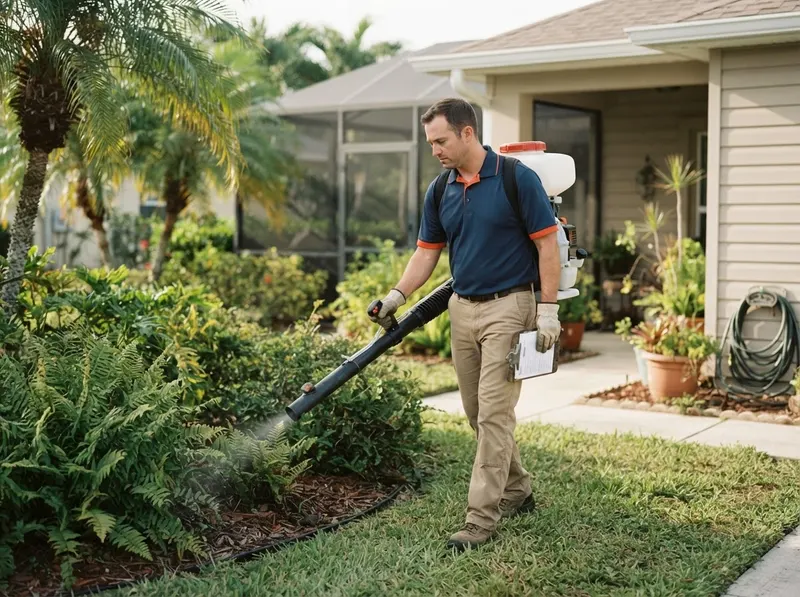
Flea and tick yard and home defense targets the severe biological pressures created by Southwest Florida's humid climate. In neighborhoods bordering dense greenery such as Pelican Preserve, Botanica Lakes, and Gateway, shaded lawns and high soil moisture support exponential reproduction of cat fleas and brown dog ticks. Over-the-counter bifenthrin sprays break down rapidly under ultraviolet exposure and 80-degree soil temperatures. A professional protocol utilizes micro-encapsulated adulticides paired with pyriproxyfen-based insect growth regulators (IGRs). This combination prevents juvenile flea larvae from forming cocoons inside carpets and baseboard crevices along Whiskey Creek and McGregor homes, while establishing a residual exterior barrier capable of withstanding heavy afternoon rainstorms.
Selecting dual-zone mitigation over standalone interior foggers prevents common re-infestation cycles. Interior-only sprays leave outdoor harborages active in dense St. Augustine turf and mulched beds, allowing pets or wildlife near Six Mile Cypress Slough Preserve to carry new parasites indoors within 72 hours. Standalone yard treatments leave protected pupae dormant inside wood floors and under furniture in historic properties throughout Dean Park Historic District and Iona. Dual-zone defense treats both microclimates simultaneously, halting host transfer. The primary operational trade-off involves preparation protocols: indoor occupants and pets must vacate treated structures for 2 to 4 hours while liquid applications dry completely.
The process follows four direct steps to achieve total control:
1. Technicians conduct an initial moisture and harborage audit targeting leaf litter, crawlspaces, and pet resting zones.
2. Exterior perimeters receive a calibrated power-spray application covering turf out to 30 feet from the foundation.
3. Technicians treat interior baseboards, rug margins, and sub-furniture zones with a targeted non-staining residual and growth inhibitor.
4. A follow-up inspection is scheduled within 14 to 21 days to disrupt newly emerged adults before secondary egg-laying begins.
Properties situated on sandy soils, like those throughout San Carlos Park, often harbor deep-seated tick populations that shelter along palmetto roots and structural footings. Applying dual-zone barrier defense establishes a sustained barrier between natural ground cover and interior living spaces, eliminating nesting pressure without locking homeowners into binding long-term service agreements.
Every job gets a firm, written price after a free on-site visit.
Tell us about your flea and tick yard and home defense job in Fort Myers and we'll send a clear, written quote, usually the same day.
 Blue Timber Pest Control